
Know Your Weave
Three techniques. Matched to the room, not to what's on hand.
Hand-knotted, hand-tufted, and hand-loomed each solve a different problem: durability, speed, or texture.
01
Hand-Knotted
The slowest technique, and the one that lasts generations.
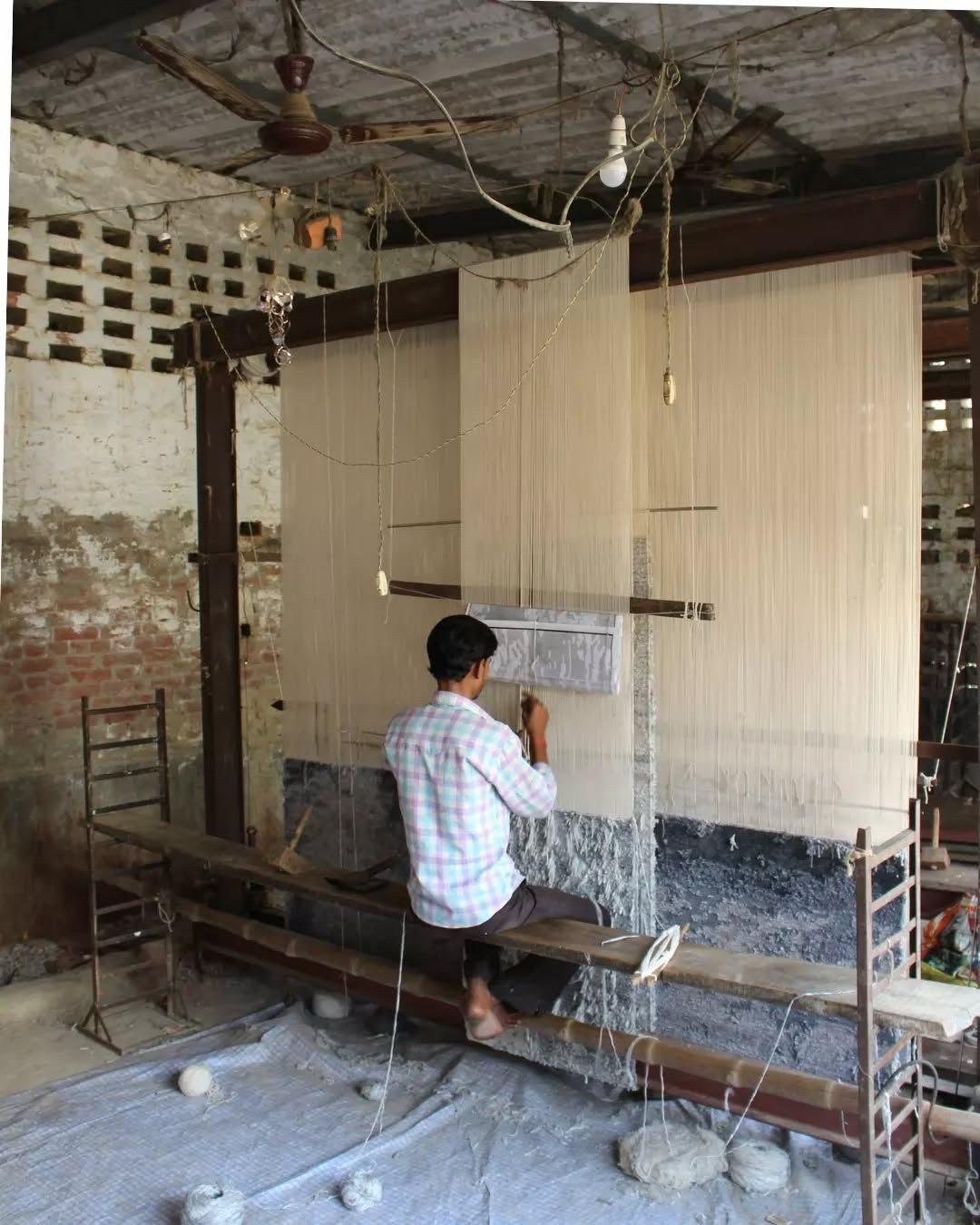
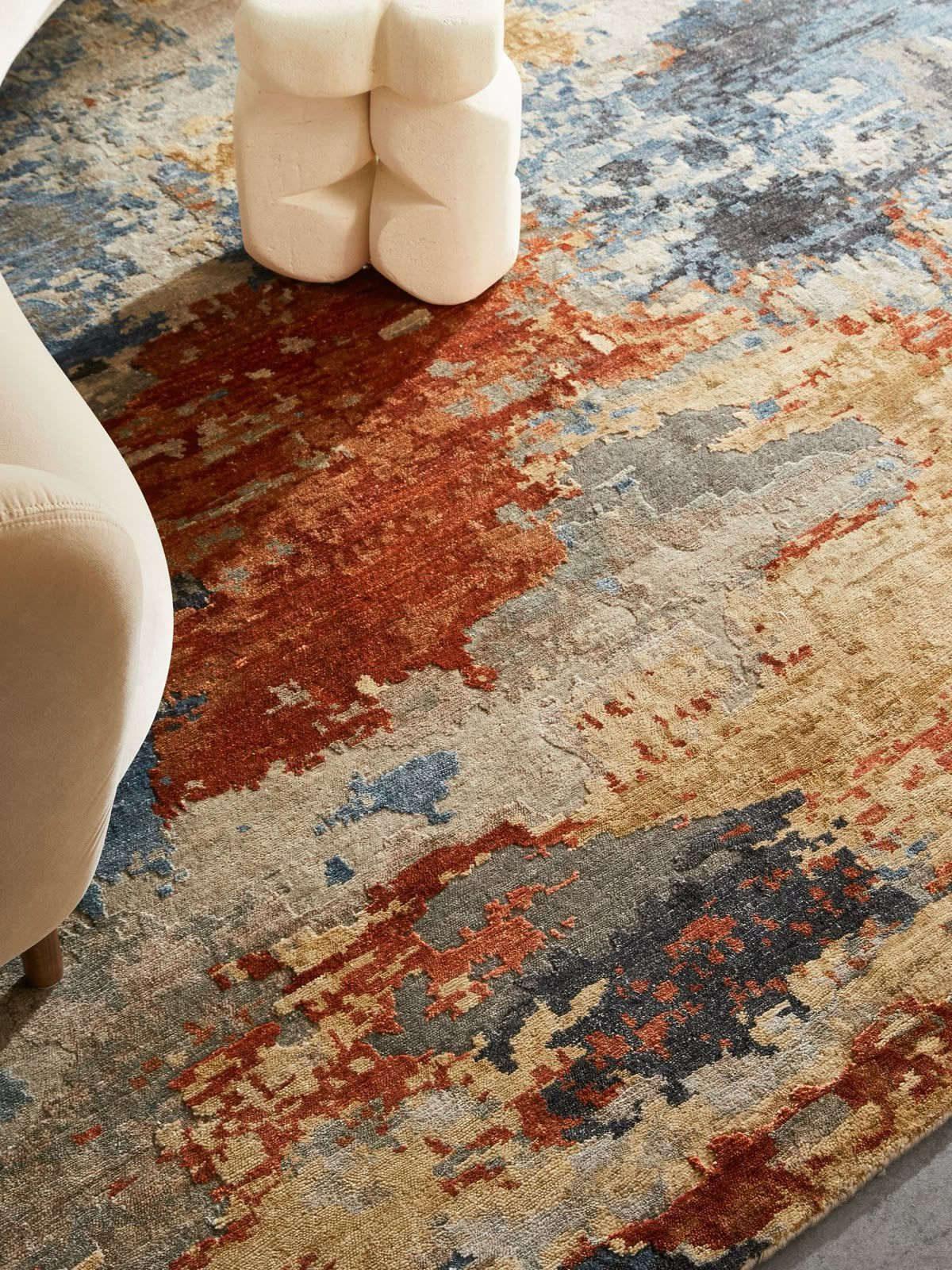
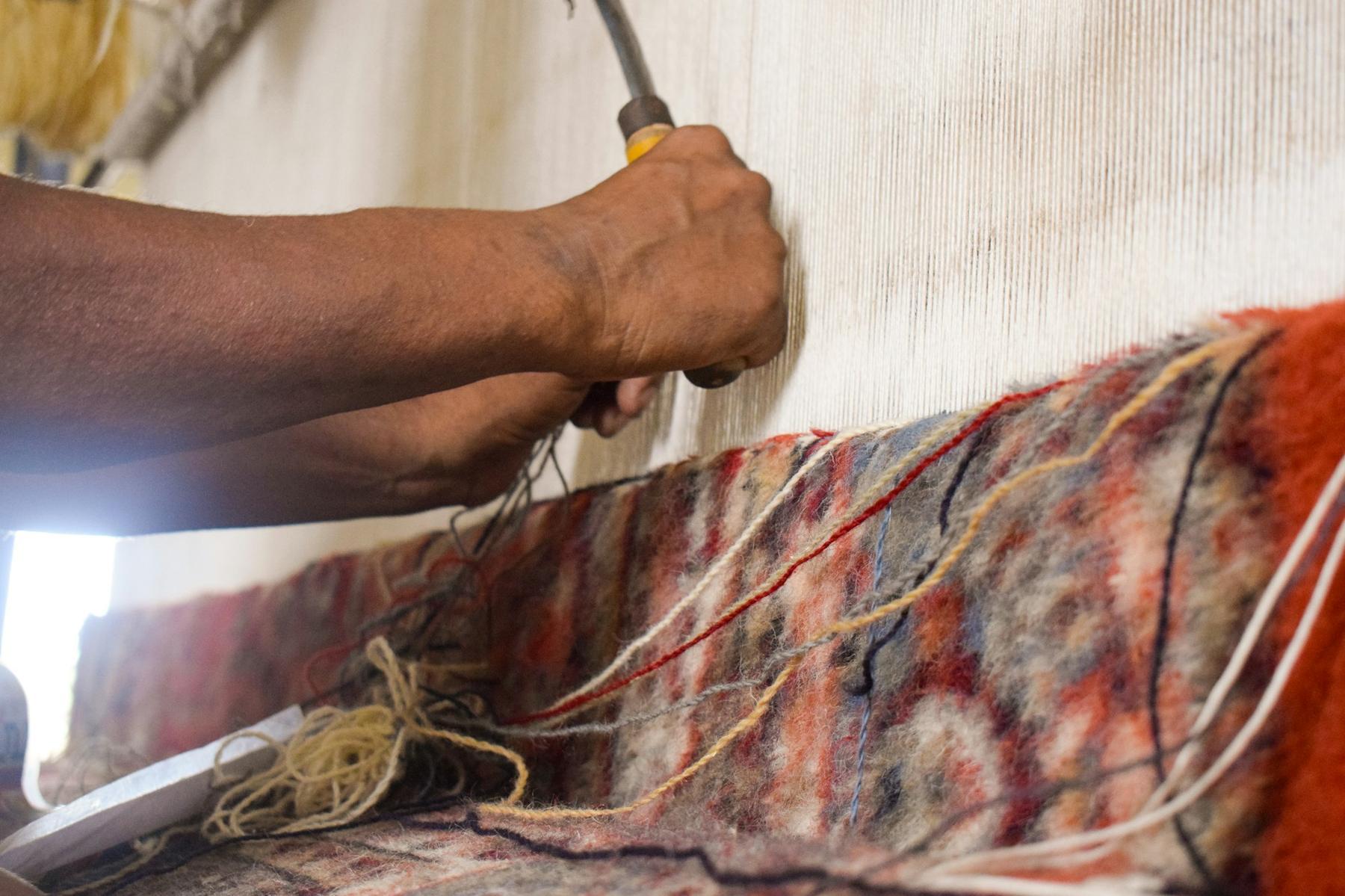
Every strand is tied by hand, knot by knot, on a traditional floor loom, with no machine assist at any stage. A hospitality-scale piece can take a small team several months to complete, worked in the same rhythm from the first row to the last. Knot density is set deliberately for each commission — high enough to hold fine, crisp motifs and resist decades of foot traffic without the pile flattening or the pattern blurring. It's the most labor-intensive of the three techniques, and the one artisans finish by hand-trimming the pile to an even, level surface before it ever leaves the workshop.
02
Hand-Tufted
Handmade, at the speed hospitality projects actually move.
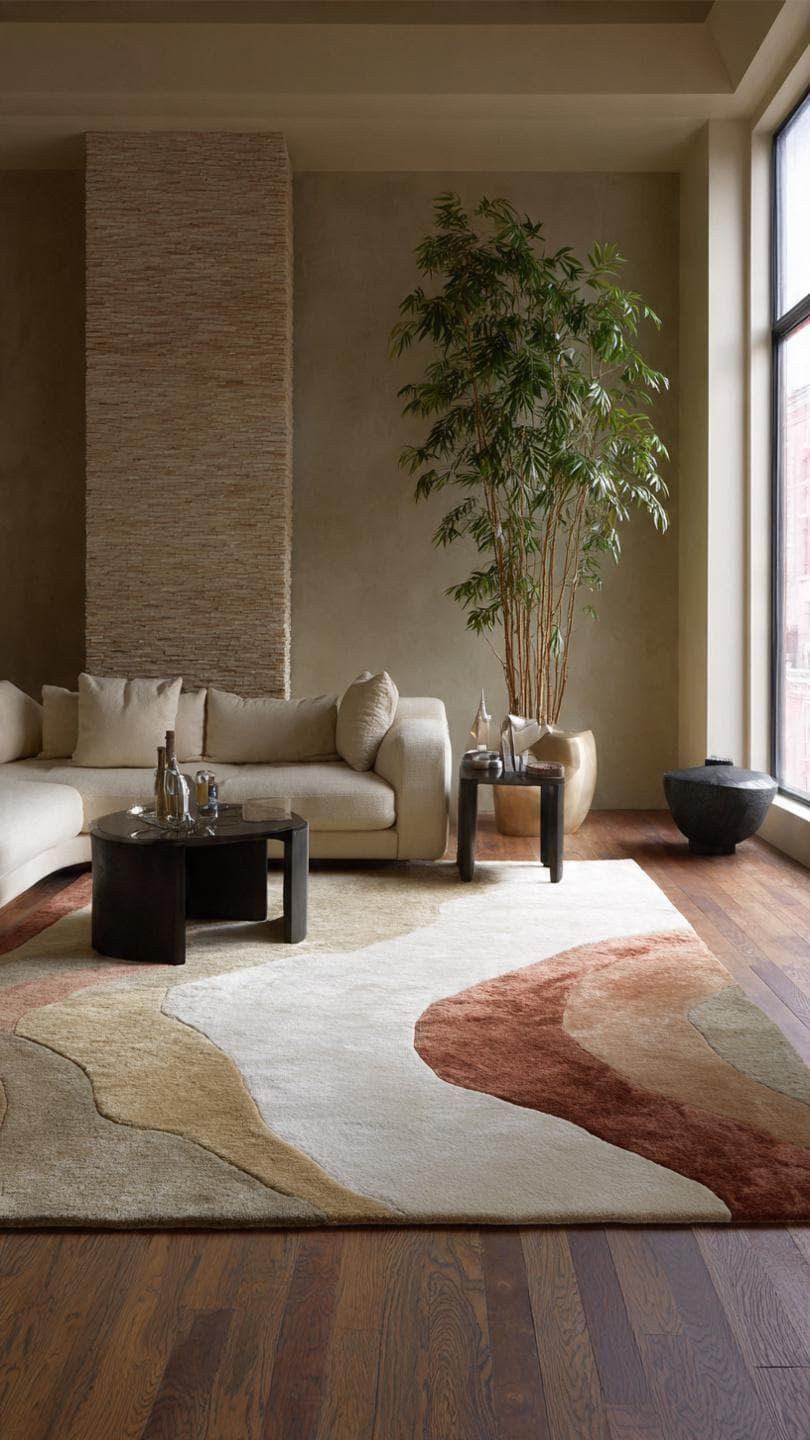
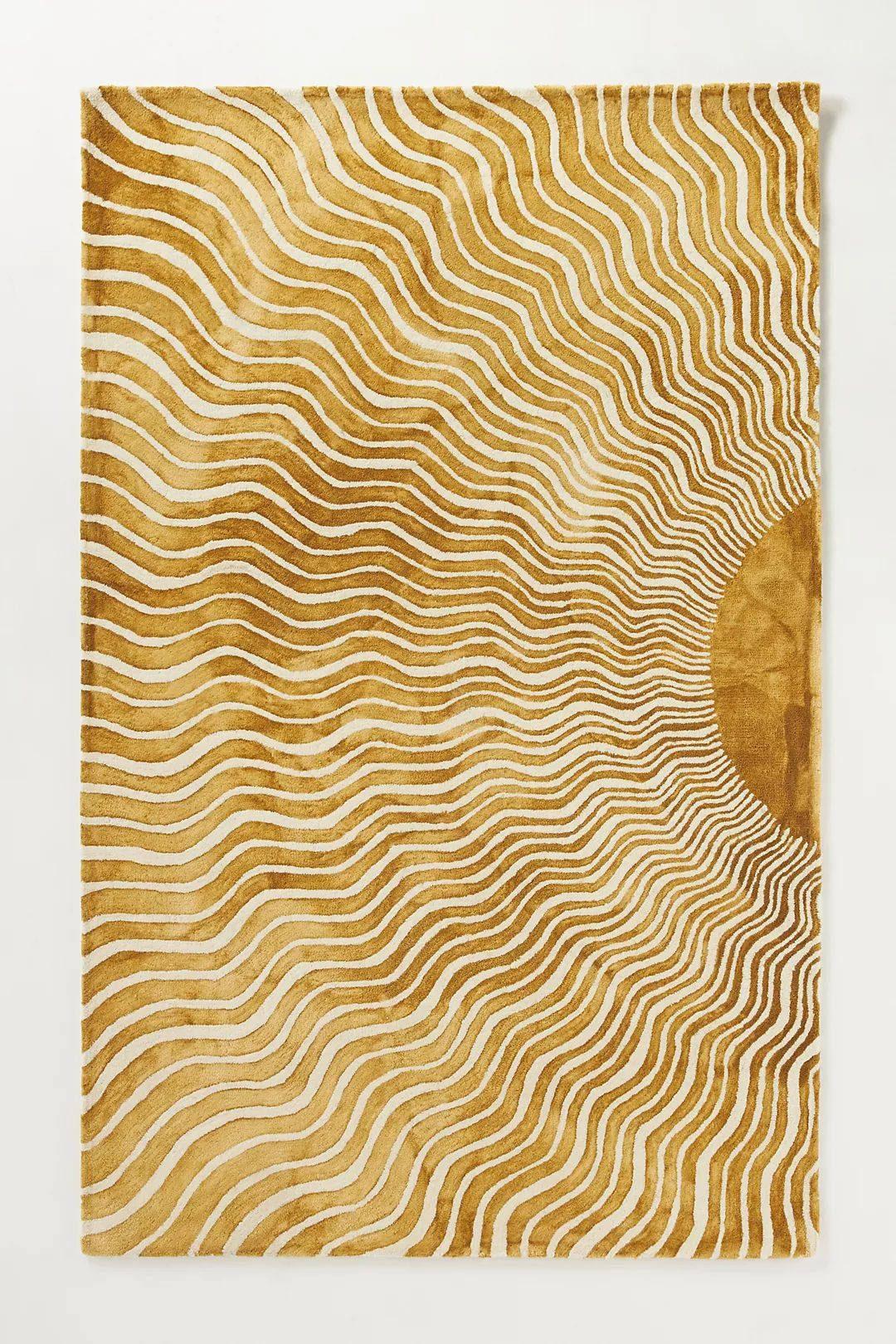
Artisans punch yarn through a taut backing with a tufting gun, working the pattern in sections before the piece is finished, sheared, and edge-bound entirely by hand. It's still a fully handmade process, just a faster one — a multi-room order that would take a hand-knotting team the better part of a year comes together in a fraction of that time. That speed makes it well suited to custom artwork, bold color-blocking, or an illustrative pattern that would be impractical to knot at volume. The pile is shorter-lived than a hand-knotted construction, though still durable enough for years of daily hospitality traffic.
03
Hand-Loomed
Flatter, textural, and built for rooms that move.
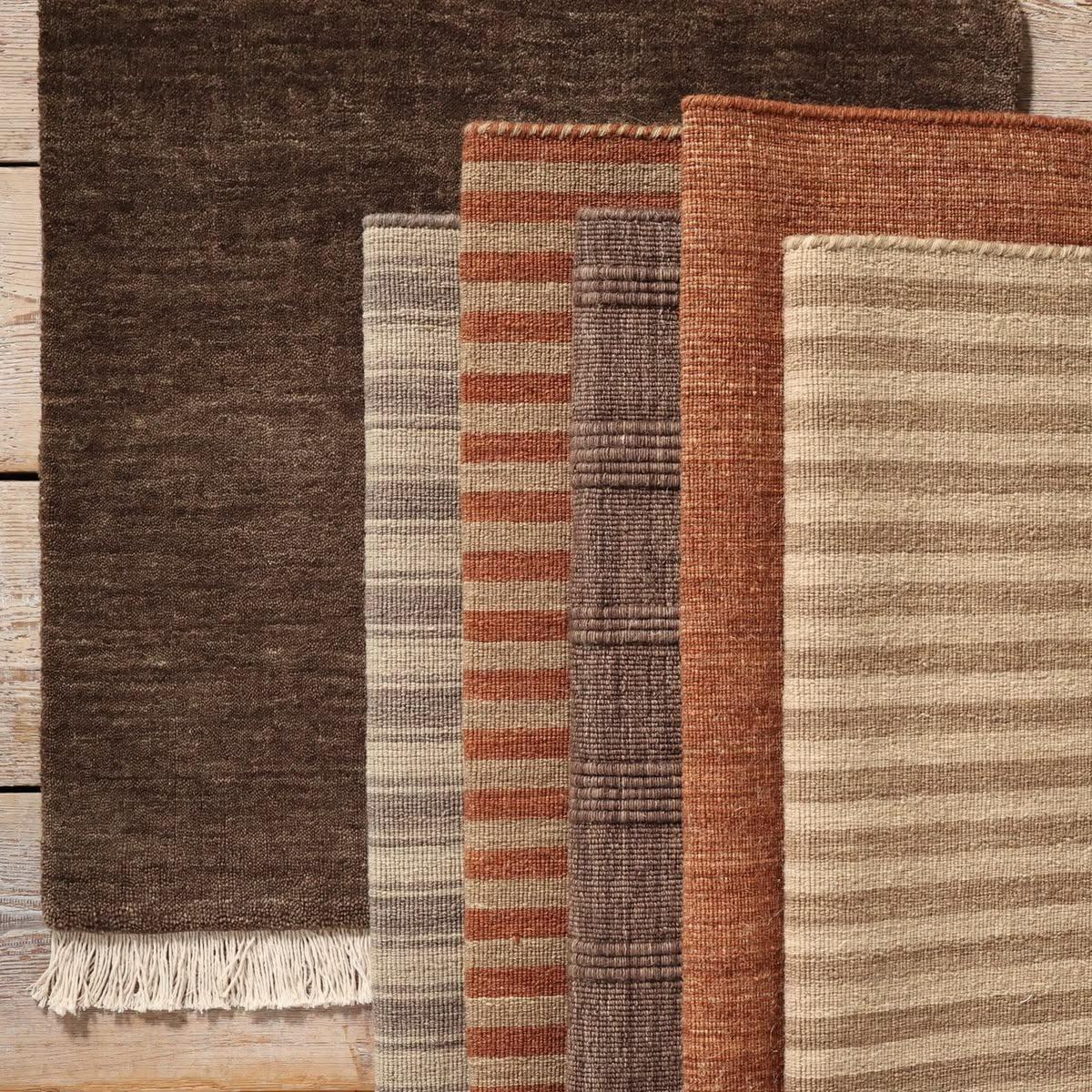
Woven on a floor loom by interlacing weft yarn through a fixed warp — the same interlacing logic as textile-making rather than knotting or tufting. There's no dense pile to build or maintain, so the finished rug sits lower underfoot and reads more like a woven textile than a traditional carpet. That flatter construction also makes it lighter and easier to re-lay, with more range in texture and weave pattern than the other two techniques allow. It's the quickest of the three to produce, start to finish.
Not sure which weave your space needs?
Send us the room and we'll tell you honestly which technique fits.